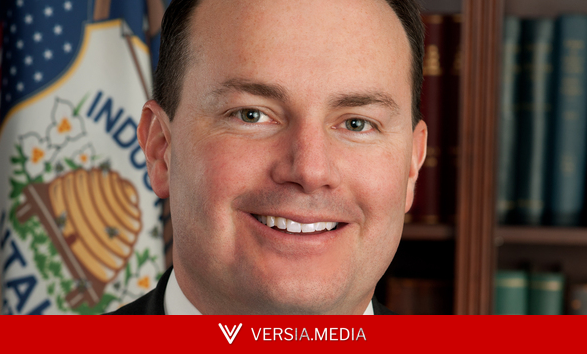
Senator Mike Lee, who consistently reminds everyone that Supreme Court clerkships do not necessarily indicate intellectual achievement, took to social media to praise a new Justice Department memo asserting that disparate impact liability is unconstitutional. This is despite the fact that the concept has been embedded in over fifty years of legal precedent and was explicitly codified more than three decades ago.
The new opinion cited the Supreme Court’s shadow docket order permitting Alabama to implement new election maps as evidence that it is unconstitutional for the EEOC to leverage its enforcement authority to compel employers to adhere to the Civil Rights Act. In theory, the shadow docket is intended for emergency rulings that apply only to the specific parties involved, but… YOLO. Consequently, an interim order allowing Alabama to conduct an election using racist maps became the foundation for dismantling laws against employment discrimination.
Disparate impact is yet another perverse conception of civil rights that pushes “good” discrimination to supposedly combat bad discrimination. It’s why I introduced the Restoring Equal Opportunity Act with @RepBrandonGill to ban disparate impact policies that incentivize racial… https://t.co/Ek8XO0AaMF — Mike Lee (@SenMikeLee) June 9, 2026
Disparate impact is yet another perverse conception of civil rights that pushes “good” discrimination to supposedly combat bad discrimination. It’s why I introduced the Restoring Equal Opportunity Act with @RepBrandonGill to ban disparate impact policies that incentivize racial… https://t.co/Ek8XO0AaMF
LexisNexis Practical Guidance Rolls Out Dedicated Practice Area for AI & Technology
The emerging generation of AI-related legal issues is inherently cross-disciplinary, touching on corporate law, intellectual property, data privacy, employment, corporate governance, and regulatory compliance.
For such an ardent advocate of genuine merit-based hiring, it is easy to overlook that Lee secured a Supreme Court clerkship through his father’s former assistant. Nepotism beneficiaries always seem to have the most profound insights about minorities lacking “merit.”
If only Mike Lee had a connection to a historically persecuted religious group that could easily become targets of discrimination only detectable through disparate impact liability…
Mike appears to have absorbed nothing from the prior week, when his social media feed became a continuous stream of complaints about the Defense Department releasing a new coding system for religious affiliations that categorized the LDS church as a non-Christian religion. After Lee objected to the DoD policy, the Pentagon “resolved” the issue—not by reinstating Mormons within the Christian religious community, but by eliminating the entire “Christian” category to avoid acknowledging Mormons as “real” Christians. This mirrors those conservative jurisdictions that banned marriage altogether rather than allowing gay couples to wed.
AI Is Reshaping Legal Practice—But Tools Aren’t The Real Differentiator.
Explore the mindset, cultural shifts, and training strategies that define the AI‑savvy lawyer, revealing why human judgment, standardized competence, and integrated learning—not technology alone—will shape the future of the profession.
Pete Hegseth’s decision to exclude Mormons had no practical effect, but as a symbolic gesture it served as a reminder that the Christian nationalists Lee actively supports will eagerly discard him at the first chance. However, that is the nature of civil rights… dismantling them is enjoyable until they come for you.
Topics:
Breaking Government
Government
Mike Lee
Racism
More from Above the Law
Why Litigation Is Starting To Look Like Product Management
At The Kennedy Center, It’s Curtains For Trump
Amgen Turns To An Independent Review To Defend Rare Disease Drug In FDA Crosshairs
Morning Docket: 06.15.26
From the Above the Law Network
Meet Eve — The AI Used By 800+ Top Plaintiff Firms
Legal Is Changing. And NeoSummit Is Where The Future Is Being Built.
Product Spotlight: Lexis® Create+ For Litigators
Labor and Employment Federal Litigation Trends 2026