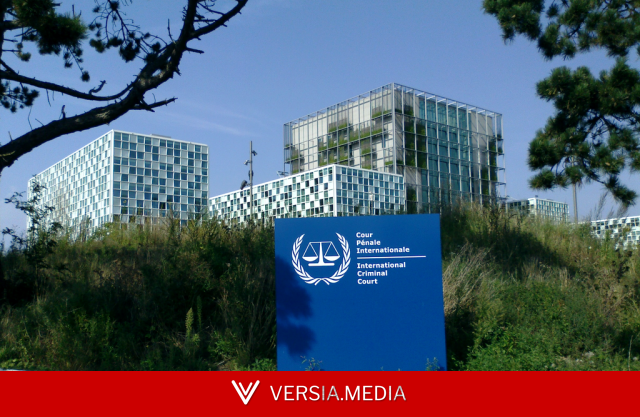
Amnesty International on Thursday warned that Burkina Faso, Mali and Niger’s recent decision to submit formal notifications of withdrawal from the Rome Statute of the International Criminal Court (ICC) paints a bleak future for thousands of conflict survivors, denying their right to truth, justice and reparations.
In commenting on the gravity that this decision holds for victims of crimes against humanity, Marceau Sivieude, Amnesty International’s regional director for West and Central Africa, stated: “Withdrawing from the ICC amounts to a headlong retreat by these governments from their international law and justice obligations. It will also further imperil civilian lives and further enshrine impunity for crimes under international law.”
The three countries form the Alliance of Sahel States (AES), a mutual defense and economic confederation that seeks to reject the political influence of traditional Western powers. On September 22, 2025, the countries made headlines when they announced their decision to exit the court. In justifying this decision, a joint communique was issued, in which they branded the court an instrument of neo-colonialism and selective justice, and saying they chose instead to preserve their national sovereignty against what they termed as Western imperialism.
On June 18, Niger became the first of the three to formally submit its written instrument of withdrawal to the UN secretary general, in accordance with Article 127 of the Rome Statute. Six days later, Burkina Faso and Mali followed suit. Pursuant to the rules of the Rome Statute, a country’s withdrawal takes effect a year after submission of the formal notification. Before the AES made its sudden announcement of collective withdrawal in September 2025, other countries had recently withdrawn from the international court, including Burundi and the Philippines.
The AES countries are currently bound by coordinated military actions to beat back surging jihadist offensives, which have resulted in massive civilian casualties across their shared borders. The Sahel war, which has contributed to an ongoing catastrophic humanitarian crisis for the region, has resulted in multiple civilian massacres and extrajudicial killings committed by state security forces and paramilitaries with Kremlin ties, as well as by insurgent groups.
Women and girls routinely live in a climate of fear due to the sheer scale of gang rapes, abductions, sexual slavery, and forced marriages orchestrated by armed groups and unaccountable actors. With internal judicial systems effectively paralyzed, the ICC presented a mechanism for justice in the region. The AES have proposed an alternative Sahel Criminal Court for Human Rights, to be based in Mali.